

Photo by Rajendra Biswal on Unsplash
When I was little, we used to live in a small house. It was a regular house but for one thing. Right beside our house, almost touching the kitchen wall stood a giant mango tree that every year gave a glorious harvest of ripe, red mangoes. While we and our neighbors appreciated the fruit, our family was not pleased with how the tree bullied our house. Its tentacle-like roots had begun invading through our kitchen wall, and in response our dainty house was bulging inward. My mother was worried; she feared one of these days the tree would push the house too far, and it would cave in, taking all of us with it.
The rains did not help the situation either. While the tree thrived in the rains, the walls of our house were less thrilled. First, the kitchen wall, already under assault, puffed up with moisture, then the layers of plaster turned into a fibrous, cotton-like texture, which eventually shed like powder. Once our (my and my brother’s) initial fascination with that fibrous plaster was over, we tried not to touch it, as it would fall off easily and create a cleaning hazard. I know that seems like the least of the concerns, given the situation, but having to clean it multiple times a day every day did get on your nerves. And while we could still manage that, my mother’s nerves were already busy with other worries, so we spared her the drudgery of cleaning our wall’s defeated residue.
The days rolled on, and so did the roots. There was a massive, rather concerning crack developing on the wall that snaked itself towards the ceiling. In my head that crack was a timer. The day it reached the roof was the day our house would give up. A comforting thought, as it implied that we had time, and as long as the house stuck to this imaginary deal I made with it, there would be no tragic surprises. In my attempt to outwit the tree’s plans and buy us more time, I would stick the playing clay into the major crack in hopes of mending it. Needless to say, a bit of modeling clay was not going to be our savior. But we all had our ways of coping, our little illusions of control. Of course, I didn’t trust my crack theory entirely; the house had a way of keeping us on edge.
One of these days, we got ambitious, contrary to what the situation had allowed us for a while. My mother decided things could not stay this way; what clay couldn’t solve, plaster would. So, she found someone who sloppily applied cement and plaster over the torn wall. Our wall looked neat and pregnant, with its freshly plastered bulge. We were pleased with it; it certainly was an improvement on the cracked, brittle excuse of a wall we had before. Of course, just like our optimism, the wall didn’t last very long. The roots of that tree poked through our new wall, mocking our trust in that concrete layer.
Unless one day our house decided to grow legs and move aside, we were well-rooted in this problem. As usual, we decided to compromise and live like adventurers in the house we suspected could fall apart at any moment but hoped wouldn’t until we were safely out of there. Thus we coped by relegating our fears to a distant future. As long as the fear of that house falling apart was an abstract one, we could still sleep at night.
I think back now and wonder if that fear was not as abstract for my mother as it was for me. I’ve discovered that one of the many aspects of growing up is that your fears become more concrete, more realistic, and thus more probable. And hope is inversely proportional to fear; when your fears begin to turn concrete, your hope turns abstract. And abstract hope is no match for realistic fears. Then again, besides depending on an abstract hope what choice did we have? We didn’t have the means to move, so we toughened up because our wall couldn’t.
While we tried to ignore it to the best of our efforts, we knew we were only seeing part of the problem—the roots that were breaking through our wall above the surface. Who knows what it had done to the foundation of the house? We tried not to imagine it and limited the size of the problem to the view of it.
Then, the view of the problem expanded.
We saw the roots slightly jut out from the floor; there was always something new with that notorious tree. That house was a ticking time bomb. The more the tree spread, the more our house folded. We comforted ourselves by saying—yes, the house may fall down, but not today and not on us. Perhaps it was because, by this point, we had lived with that bully of a tree for so long that we had accepted that all kitchen walls came with trees spreading themselves through it. It was weird for us when they didn’t.
My brother and I were children; our imagination was elastic, so why couldn’t the house be the same? But my mother suffered in that house, especially because her mother’s house had those pristine walls with not a crack and paint on them. Having lived under secure walls, she couldn’t rest living with cracked ones. She knew houses aren’t elastic, they don’t fold they break.
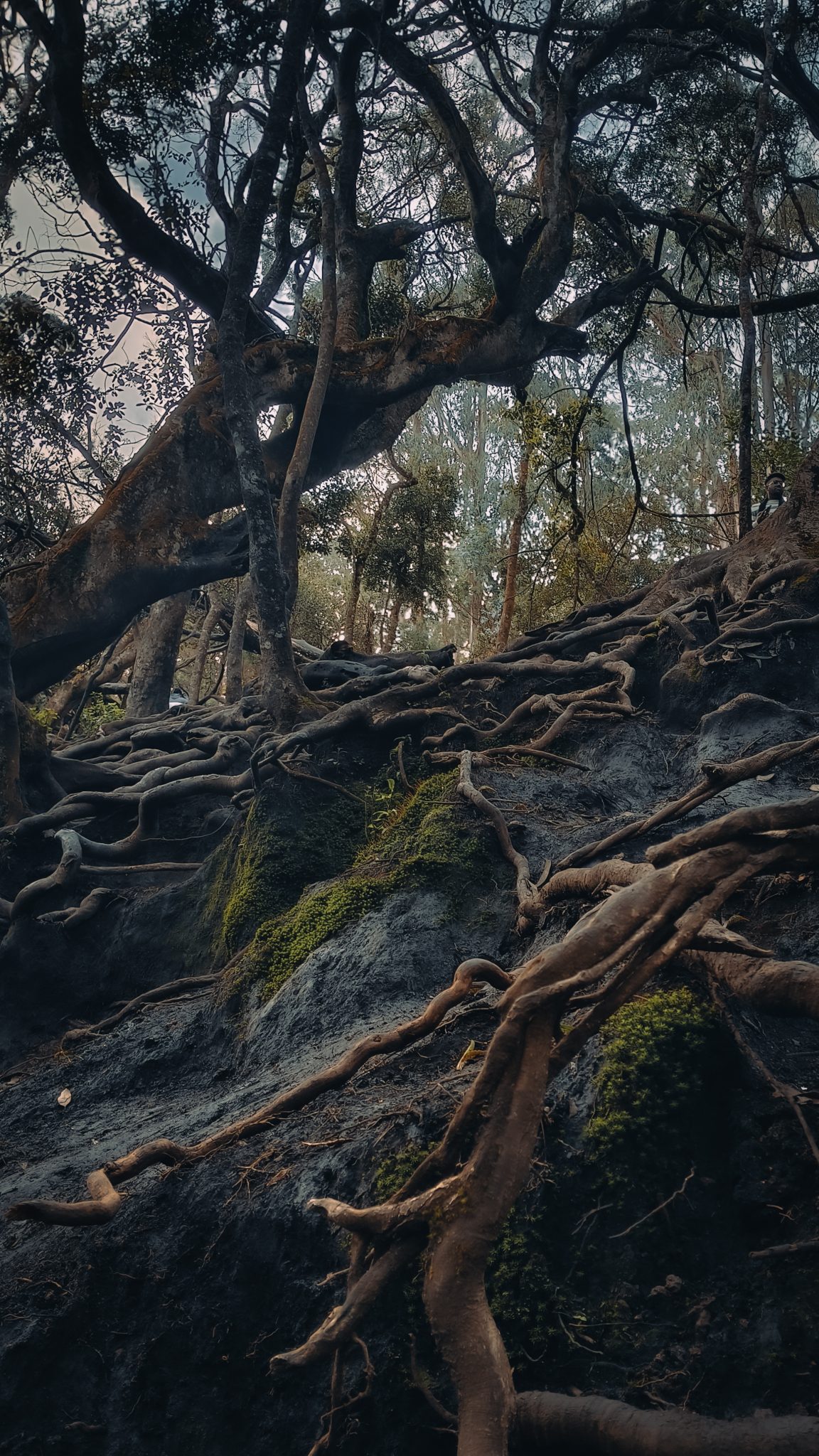
That tree had a will of its own, and sadly, our house was in its way. One of these days, the kitchen wall would have given in and crumbled. We did not stay there long enough to be witness to that—thankfully. But there were those nights, during the rainy season, as the rain pelted on the roof, my mother and I would wake up in the night (my brother had the gift of deep sleep that no one could interrupt, not even probable doom). I never looked at her, and she never spoke to me, but I knew she was awake. We just lay there, with our eyes open and with a silent dread that kept us still.
I had heard her talk of the roof falling down on us so many times to ignore the rumbling thunder. Those flimsy walls, what could they do against those violent rains? Times like that it felt like our house was carefully balanced; a movement, a sound, or even an erratic breath could make it fall to bits. So, we held ours in the dark of the night, looking at the window that sieved the yellow street light through it. That warm light appeared to tremble in the rain, like it too was afraid of being buried alive.
Against all odds, our house kept standing and shielding us. I kept thinking that it was honoring our deal. Those rainy nights never made me wish the rains away even when they terrified me; I loved those violent rains, but I preferred them in the day than in the night. In the night, I only saw the shivering shadow of the rain; in the morning, I could watch it in all its glory.
Winters did not bring the comfort one hoped for. Deep into the slumber of a dry winter, the tree shed its leaves. The bare tree with its spindly branches looked ghostly. At a particular hour in the evening, as the weak scarlet sun set behind it, the shadow of a low branch would menacingly crawl farther into the kitchen through the window. I was convinced that those shadows were a trap; just when you least suspect and step into their web, they would fold around you and drag you to make you a part of that tree. I avoided entering the kitchen at that hour, of course; I couldn’t convince my mother of the same; she did not have space for creative fears. So, if she was in the kitchen at that time, I kept watch.
Sometimes I think, they succeeded; a distant shadow of my childhood still lives with that tree.
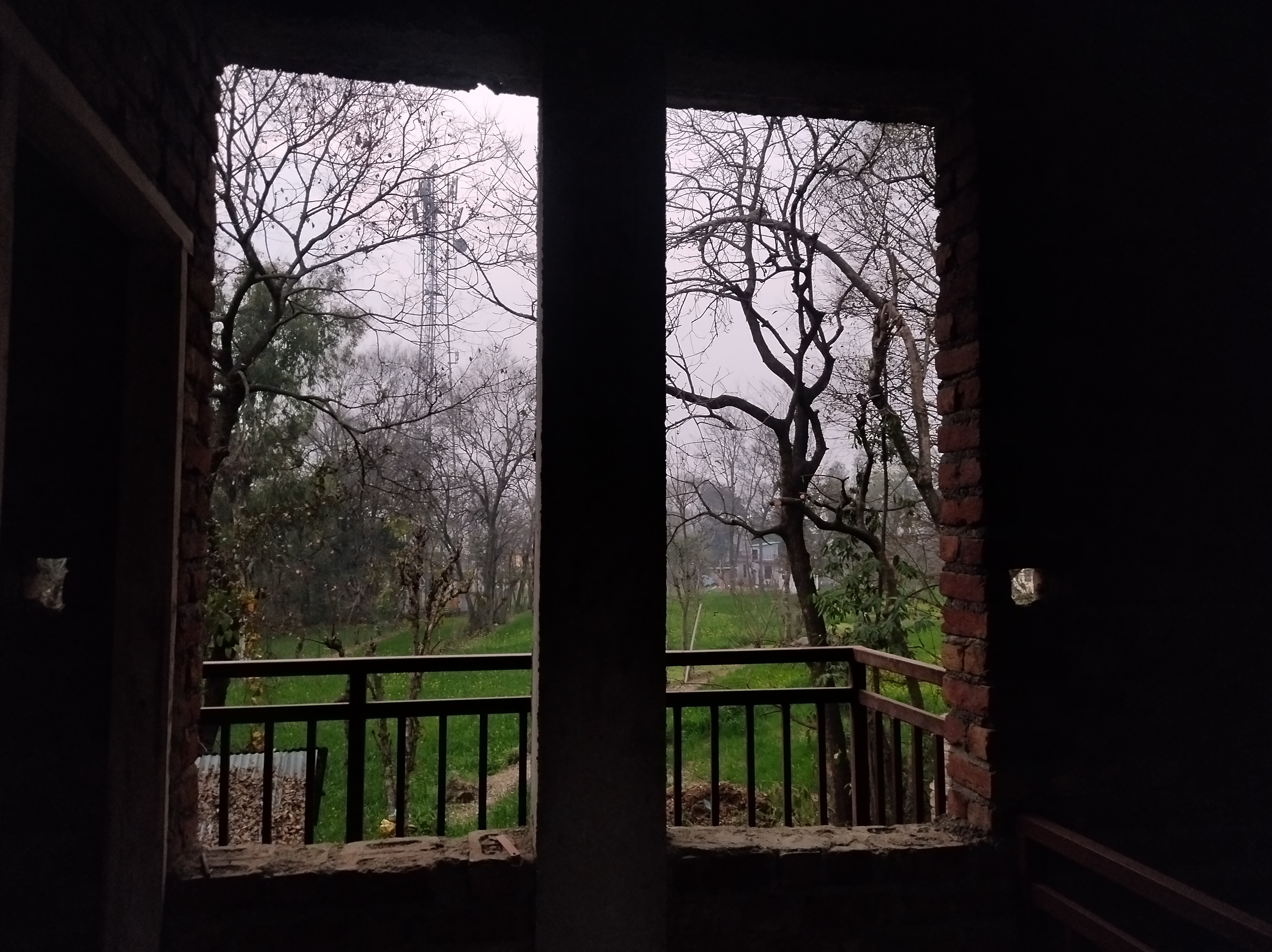
I didn’t realize when I began to talk with that tree. In so many ways, it had become a kind of playmate to me. It kept me engaged; there was never a dull day with it around. The more I talked to it, the less intimidating it became. I never wished for that tree to be cut, so I was always secretively happy when told that for some reason we were not allowed to.
There were many mango trees in our colony, but ours was the most famous, not for the trouble it caused us, but for the fine quality mangoes it bore. The ripest ones were always on the tallest branches with no way for us to reach them. We all had eyes for the best ripe produce at the top. I remember one season there were two or three mangoes with flushed red skin that glistened in the sun. We had watched them for a while with gluttonous eyes, waiting. Two of them fell victim to a pair of parrots—one remained—the best one. Every day after school, we would rush home to see if that coveted fruit had fallen to the ground today.
One day a man from the electricity department showed up. He said he wanted to check some wires in the area and in order to do so climbed up the roof of our house. When we came home after school, we saw the red mango was gone. The scarlet skin and the seed lay on the ground outside our kitchen, along with several such peels, like a murder scene. According to the neighbors, he even carried a bag full of mangoes with him. We were furious.
Then another person offered to help take the fruits down. The deal was he would take some mangoes in exchange for the help. We got half a sack of mangoes, while the man smuggled two sacks of the best ripe mangoes for himself and fled. Mom decided she would not trust anyone with the tree anymore. Those years made me place my trust in trees more than it did in people. In spite of the threat it posed to us, I had grown attached to my mango tree. Years later, I still remember it, and I have carried my habit of talking to trees to our new home.
That tree taught me to be resilient and exposed people’s greed. For me, it was invincible. Last I heard, they were demolishing those houses. While that hazard of a house is not far from our new home, I have not visited it. Part of me believes that the tree helped demolish the house before people did. I wonder now if the crack finally reached the ceiling and ripped the house apart. Or if the tree grew around it, making the house part of itself, spreading through it where once only its shadows reached, holding it together. Whatever it did, I hope it won and thrived.
A small part of me fears that someone cut it down, which is one of the many reasons I have not returned to that site. Now, I live in a new house with a new tree that I watch closely. This one doesn’t endanger our house, nor does it bear fruit; it is, however, magnificent and home to a variety of birds. It’s spring, and the tree is flaunting fresh, sap-green leaves that filter the sun’s rays as it sets behind it.

In my imagination, that tree will stay there for ages. When I and my life are forgotten, when the last of those houses are demolished, and the landscape has a new face, that tree will stand there.
If you like nature writing, here is a book recommendation: The Overstory by Richard Powers
 BooksArtAndMusings