
(A personal essay about anxiety, perfectionism, fear of mistakes, and learning to take up space.)
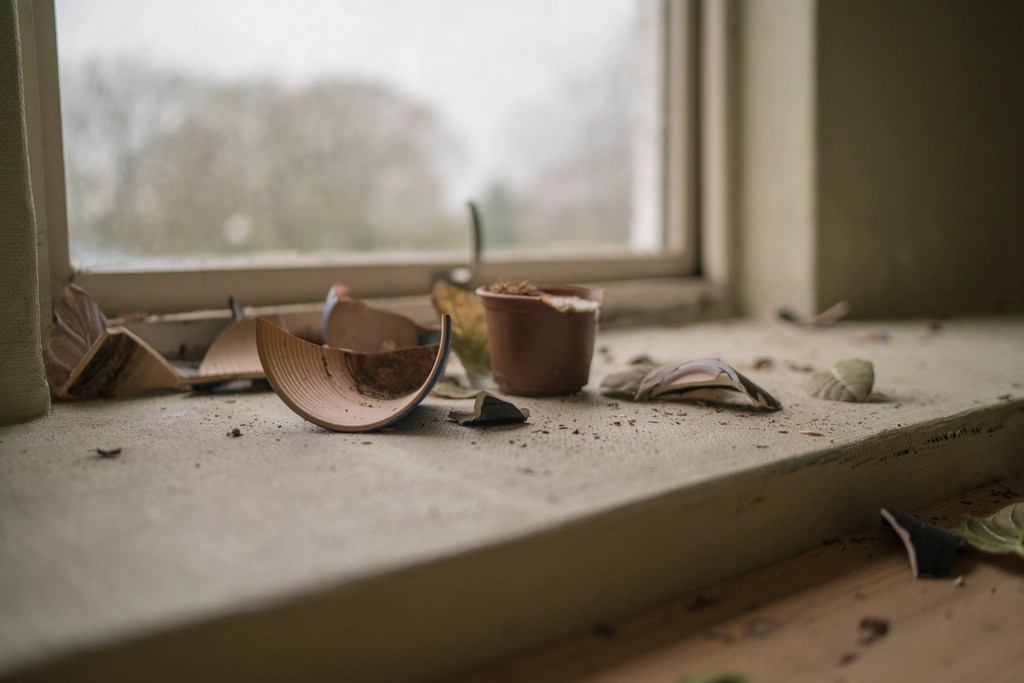
I place my cup on the edge of the table, full of piping hot tea. The steam is curling up from it, swaying rhythmically and lingering over it as if it has all the time in the world. I envy it. As I crawl into my bed, a thought scoots its way into my already anxious mind that is juggling ten others: if I accidentally brush my toes against the cup while getting in, it would fall and break. Moments later, the exact same thing happens. The cup crashes to the floor, breaking dramatically like it has prepared for this moment for a lifetime (whatever precarious lifetime a cup has). And all I do is stare at it. With every passing second, the liquid is spreading on the floor, getting under the bed, and threateningly moving towards the carpet, but I don’t move. I can’t explain why, even though I saw it coming, I need time to come to terms with the fact that the cup broke.
In life, I have often operated the same way: anticipating disaster so thoroughly that when it finally arrives, I can only watch it unfold.
If you have ever dealt with anxiety, then you know—you imagine all things terrible in great detail, hoping that in rehearsing the pain, you will be able to circumvent it, and yet somehow the terrible happens, and that too in a way that it feels like it has plagiarized your imagination; as if your imagination had tempted it to happen or worse, conjured it up out of thin air. And yet all that does not make you better prepared to deal with it, you watch that spill soak your life through before you act.
For most of my life, I carried two instincts. The first was to be careful at all times, always alert to what could go wrong. The second was to make sure I was not an inconvenience to someone. I incurred much harm because of this.
Little did I know that being too careful can become its own kind of recklessness. A friend once told me that the best way to drive is not to stare at the cars on the road but to focus on the gaps between them, the space where you actually need to go. If you keep your vision locked on the car you need to avoid, you will end up hitting it instead. It took me some time before I learned that if I keep imagining tragedies for myself, I will end up orchestrating my life to fit one. But what could I do? When life hurts you young, vigilance becomes your wisdom. You learn to constantly look out for the next bad thing, and every fresh wound only confirms your suspicion that all the bad you imagined is going to happen.
By now, a corner of my carpet is spoiled, and that finally shakes me out of the stupor. I drag myself out of bed and use an old garment to clean up and collect the broken pieces. Some of the pieces are sharp and still hot; I carefully sweep the floor after cleaning to make sure no jagged bits remain on the floor in wait to draw blood when one least suspects. Only when I am done do I feel the burning sensation on my foot; it is not a severe burn, but the skin is red and inflamed. Some aloe vera gel should be enough to treat it. I’ll do it later, I tell myself.
I’m exhausted, not because of the cleaning—this is not a princess and the pea story. I am tired in general, not the kind of tired you get after a hard day’s work or a run (I dream of getting that kind of tired); it’s the kind of tired that cannot be cured by sleeping because you are never at rest, and yet on the outside, you hardly move. It had been a hard day; simple things required enormous energy. The tea I prepared for myself was supposed to give me comfort, and today, not only did I desperately need that simple comfort, but it also took a lot out of me to arrange that comfort for myself. Now I cannot bring myself to make another cup. So, I sit on the edge of my bed like the cup sat on the edge of the table, my legs hanging down, my toes brushing the floor, and my hands on the side, gripping the mattress, supporting my resigned frame. Don’t judge me; I get to be dramatic, too.
I wonder when it began that breaking a cup would make me freeze or ruin my day. All I can say is, it was sometime early in my life.
Around my teenage years, I went through a phase where I was constantly dropping things. It was great that Indian households kept steel and brass utensils that don’t break on impact, or my mother would have had to enter a separate budget to balance my misadventures with the crockery. To me at the time, it seemed like everything that I held was determined to escape me with a dramatic crashing. Looking back, I have a theory as to why.
Parents of infants all over the world can be heard complaining sullenly that their children grow up so fast. In those early years of our lives, there are people around to help us engage with our surroundings. As our arms and legs grow and we learn to grab things and walk, our falls are cushioned, our steps supported by adult hands. But then, around your teenage years, you grow up fast without anyone explaining or helping you through it. Your bodies change, and if you are a girl, the change is more drastic and less forgiving. Your balance shifts; you are a little restricted; your arms are always close, ready to shield you, and there is no one to help you negotiate with your surroundings, so mishaps happen.
Another thing happens: before you even realize the change in the way people view you makes you walk differently, it makes you walk less freely. I used to love running, and I used to be fast, but as puberty hit, I stopped, all because I was aware of being watched. So I learned to shrink or to be invisible, to be a wisp of a presence that no one must notice, but at the same time, I was growing. I could not keep up with the speed at which my relationship with my surroundings was changing, which led to me dropping and breaking things more than ever.
Breaking things attracts attention. It announces your presence to a room. It invites frustration, anger, and embarrassment, all things I wanted to avoid, for these were all things that made me visible.
In middle-class households, breaking something was never just breaking something. It woke the whole house. It did not help that my poor, frustrated, overworked mother had to clean up later. What to others felt like minor inconveniences would wreck my mother’s day; I did not wish to cause her any more discomfort. Minor inconveniences had a way of becoming the final straw in homes that were already stretched thin by work and worry. Still, the more I feared breaking things, and the more I feared my own body, the more glasses were tossed, tumblers spilled, and cups were shattered. And as if in a silent revolt, the more unnoticeable and small I wanted to be, the more my body grew and invited scrutinous eyes.
Always nervous, I had grown so clumsy that I would think my hands had started turning amphibious, secreting a nasty slime so everything would slip from my hands, and in some ways, I made everything dirty. Right around this time, my changed body was also being bound in shame. All this only increased the discomfort of my bodily constitution.
I don’t remember being religious, but as a child, adopting your parents’ beliefs, I believed in some sense of God; it was a fascinating concept, so when I was told that during my periods I was not to enter the temple of my house or that no prayer would be done during that time, the message was clear: I was unclean; my body was unclean. My reaction to it all was to shrink away from the surroundings so I don’t break or befoul things. The fear grew, and this time around, I stopped inviting new experiences and trying new things for the fear that somehow I would do them wrong, or because it was me doing them, so they were wrong. I had adopted a handicap for myself. In the pursuit of shrinking my body, I had succeeded in shrinking my world.
Slowly, I was disappearing from my own life. Even after all these years, there are times when I am around people at a concert or at a lunch, and I find myself abstracted from the present and from my own body, watching the moment as if it were a memory that belonged to someone else. It is a bizarre, inhuman experience when you feel like your body does not entirely belong to you.
One of these days, another cup, this one empty, had slipped through my hands. It landed on the carpet, but I did hear a clink, suggesting that one of its edges had hit the concrete floor. Worried that it had cracked, I picked it up, pretended nothing much had happened, and poured myself some tea in it. The cup was mostly okay, but for a hair-thin crack that travelled from the edge to a fourth of the way to the bottom. At the edge, a small triangular chunk was missing; it was barely noticeable. I began drinking the tea from it, and a few bubbles of hot liquid leaked into my hand through the crack. I played it cool (even though my hand was not cool; I’m tough like that) and continued drinking until one day I cut my lip on the damaged edge.
My mother noticed the cup days later and told me that one should never drink from a broken cup. I don’t know how she knew, but she did, that I was drinking from that cup regularly. I don’t remember the reason she gave—I only remember it carried an ominous air to it—but I learned that broken cups should either be mended (that is, if you can) or discarded; continuing to drink from them only invites harm. When I finally did trash the cup, not only had I hurt myself, but I had taught myself more ways to hide the injury and discomfort in order to hide the mistake. The crack was no longer the problem. By then, the problem was how quickly I had learned to accommodate it. It was a nasty habit, hiding pain and making excuses for it. If I had continued so, one of these days that cup holding boiling tea would have come apart in my hand and scalded me.
I have pretended many a time that a cup was not broken and sipped from it, only to injure myself. Only now am I learning to let go, and it has made all the difference.
Looking back, I know the real mistake was not making enough mistakes, not taking enough space, not being loud and inconvenient enough, and not being open to life. My fears were too big, and I grew under them; there was just not enough space for me. I wish I had been comfortable breaking things, because only then would I have been comfortable being myself. I know now that avoiding mistakes only leaves you incomplete and afraid, and that one feeds the other in a vicious cycle; as time passes, there is less and less of you left.
The most critical injury fears inflict is the binding and limiting of your imagination. You begin living only in relation to pain: how to prevent it, soften it, outrun it. But life doesn’t thrive in the presence of fear. If all you can imagine for yourself is suffering, eventually suffering becomes the only future you know how to move toward. So I have tried to free my imagination; I still imagine all the wrongs in excruciating detail, but I take a swing at imagining the good too. I struggle with it; growth is messy, but I am allowing myself to be messy, to forgive myself when I falter in the journey. I am learning to keep my eye on the way, not on the obstacles.
I put my feet– that were dangling— down securely on the floor, still warm from the recent spill, and the ghost of the warmth that the tea promised manages to make me smile. It’s not a good day, but I know I will get through it. Thinking that, I pat my hands on my lap and get up to open the drawer and get out some aloe vera.
These past years have taught me a lot about life, friendship, growth, anxiety, and hope; take a look at some of my Lessons From 2024

